Croatia travel basics: euro, Schengen, driving rules and more
By the Enjoy Istria team Published 3 min read
In short
Croatia has used the euro and been part of the Schengen area since 1 January 2023. EU citizens travel with an ID card; most other visitors need a passport and are being registered in the EU's new Entry/Exit System, phased in from October 2025. Drive on the right, keep dipped headlights on in winter, tap water is safe to drink, and the emergency number is 112.
On this page
Croatia is an easy country to visit, and Istria, with its Italian and Central European ties, feels especially familiar to many visitors. A few practical points are worth knowing before you go.
Money: the euro
Croatia replaced the kuna with the euro on 1 January 2023. Prices are in euros, cards are accepted almost everywhere, and contactless payment is normal. Keep some cash for markets, small farm shops, rural konobas and the odd parking machine. ATMs are easy to find in Poreč.
Borders and documents
Croatia joined the Schengen area on 1 January 2023. Travelling from Slovenia, Italy, Austria or Germany there are no routine border checks, though police can still carry out spot checks.
- EU and Schengen citizens can travel with a valid national ID card or passport.
- Non-EU visitors need a valid passport and, depending on nationality, a visa.
- The EU’s Entry/Exit System (EES) has been phased in at Schengen external borders since 12 October 2025, and is due to be in full operation by April 2026. Travellers from outside the EU have their fingerprints and a facial photo recorded on first entry. If you fly into Croatia from outside Schengen, allow extra time at the airport.
- The EU also plans an online travel authorisation for visa-free visitors (ETIAS). Check the official EU travel pages for its start date before you book.
When you arrive at any accommodation in Croatia, your hosts are required to register your stay with the authorities, so you will be asked for ID details for every guest.
Driving
Most visitors to Istria drive, and the rules are similar to the rest of the EU:
- Drive on the right; seat belts for everyone; children in suitable car seats.
- Dipped headlights must be on during the day in the winter period (from the end of October to the end of March).
- The general alcohol limit is 0.5 g/l, and zero for drivers under 24 and professional drivers.
- Phones only hands-free.
- Motorways are tolled. Read our driving in Istria guide for the details.
Phones and internet
Croatia is in the EU, so EU mobile contracts work at home prices under the roaming rules. Wi-Fi is standard in holiday rentals; all our villas have free Wi-Fi.
Everyday practicalities
- Language: Croatian, with Italian widely spoken in Istria, and English and German common in tourist areas.
- Plugs: European two-pin (types C and F), 230 V.
- Tap water: safe to drink.
- Tipping: not obligatory; rounding up or around 10% for good service is common in restaurants.
- Shops on Sundays: since July 2023, most shops in Croatia may open on only 16 Sundays a year, chosen by each retailer and often concentrated in the summer season. Shops at petrol stations, ports and some other places are exempt. Plan your Saturday shop, especially outside summer. See our self-catering guide.
- Pharmacies (ljekarna) are well stocked; Poreč has several.
Emergencies
The European emergency number 112 works throughout Croatia for police, ambulance and fire. Keep your accommodation address handy. Our villa addresses are on each villa page.
Planning the rest of your trip
Next, read how to get to Poreč and when to come.
Opening times, timetables and prices change from year to year, so check them with the venue before you go.
Questions and answers
What currency does Croatia use?
The euro, since 1 January 2023. Cards are accepted almost everywhere, but carry a little cash for small rural businesses, markets and parking machines.
Do I need a passport for Croatia?
EU and Schengen citizens can travel with a national ID card. Visitors from outside the EU need a valid passport and, depending on nationality, may need a visa. Check the rules for your nationality before you travel.
Is tap water safe in Istria?
Yes. Tap water in Istria is drinkable.
Stay nearby
Three private pool villas near Poreč, booked directly with the owners for 10% less than on Booking.com.
-
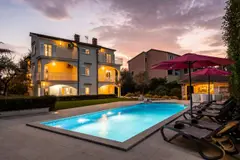 Villa Duga Špadići, Poreč From €459 / night
-
 Villa Bina Labinci, Poreč From €459 / night
-
 Villa Cvita Domenica Labinci, Poreč From €309 / night